No, you’re not seeing double—but high school baseball soon will be.
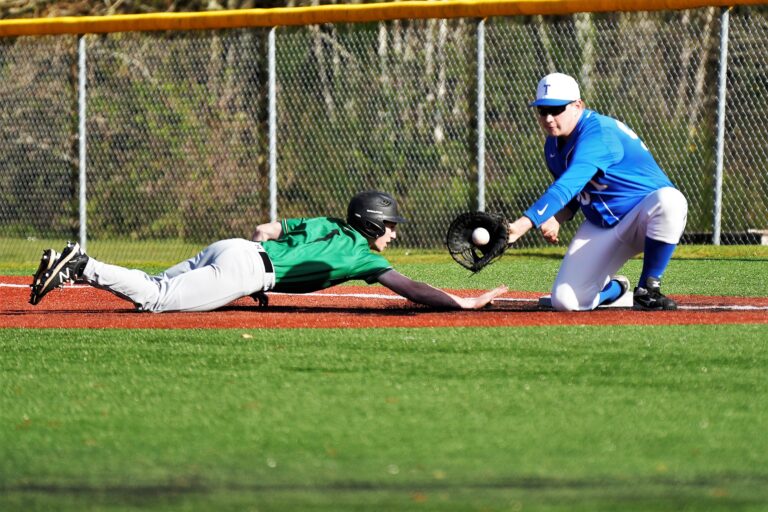
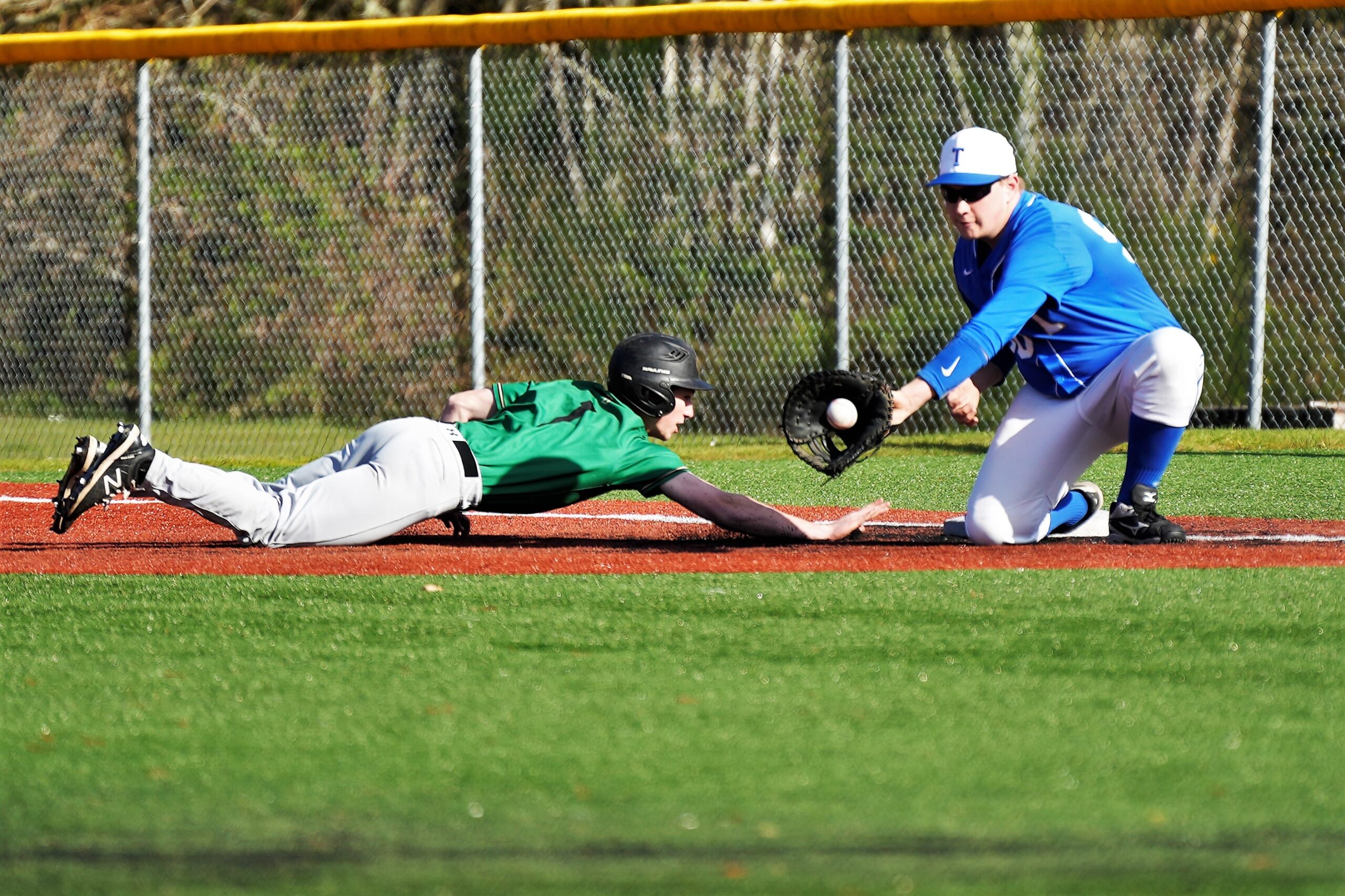
Starting with the 2027 season, a double first base will be required in all high school baseball games. The change is designed to reduce the risk of collisions between runners and fielders at first base.
This rule update is one of 10 changes approved by the National Federation of State High School Associations (NFHS) Baseball Rules Committee, following its annual meeting held June 8–10 in Indianapolis. All proposed changes were adopted by the NFHS Board of Directors.
What’s the New Base Look Like?
The updated Rule 1-2-9 outlines that the new double base will consist of two halves:
- One white portion (in fair territory)
- One solid contrasting color (in foul territory)
These halves are joined with no space between them, with the first base foul line dividing the two.
“This change reflects the ongoing evolution of the sport,” said Elliot Hopkins, NFHS Director of Sports and liaison to the Baseball Rules Committee.
“It will reduce collisions and improve safety, particularly at first base. At the same time, it helps enforce proper running lanes and preserves the integrity of the game.”
Coaches React
Brian Young, who recently transitioned from Payson High School’s varsity baseball coach to athletic director, supports the move.
“It makes sense. It’s more of a safety issue, which is good for the game,” Young said. “Some of the less experienced first basemen can get their foot too far on the bag, which creates a dangerous situation.”
Jeff McNeil, head baseball coach at Show Low High School, is a bit more hesitant.
“I’m all for player safety, and I can see how this helps,” McNeil said. “But I haven’t seen many collisions at first base, if any. I’m also a fan of keeping the game traditional.”
How It Works
Additional changes explain how the double base will be used:
- On plays at first, batter-runners must use the colored base unless a fielder fields a dropped third strike in foul territory. In that case, the batter-runner uses the white portion.
- Once a runner reaches first base, they must use the white portion for leading off, tagging up, or returning on a pickoff attempt.
- On walks or extra-base hits where no play is made at first, runners may touch either portion.
New Interference and Obstruction Rules:
- Interference: Called if a batter-runner uses only the white base on a force play and collides with a fielder.
- Obstruction: Called if a fielder only uses the colored base and collides with the batter-runner.
Additionally:
- Rule 2-5-1h: A batted ball hitting or bouncing over the white base is fair.
- Rule 2-16-1h: A batted ball hitting or bouncing over the colored portion is foul.
Other Notable Rules Changes
- Defensive Player Meetings:
- Rule 3-4-6 limits teams to one player-to-player meeting per half-inning.
- Umpires must deny any additional requests.
- Rule 2-10-3 defines these meetings as involving two or more players, distinguishing them from charged conferences, which include coaches.
“Player-to-player meetings are part of the game—strategy, encouragement, clarification—but too many can drag the game out,” said Hopkins. “This rule maintains the flow while respecting the coaching dynamic.”
- Uniform Customization (Rule 1-4-4):
Beginning in 2027, schools may include their name, nickname, logo, mascot, and player name on uniform tops and pants. - Electronic Devices (Rule 1-6-3):
Players are prohibited from wearing audio or video devices, including microphones and cameras, during games.
Participation Stats
According to the 2023–24 NFHS High School Athletics Participation Survey, baseball ranks as the fourth-most popular boys’ sport in the U.S., with 471,701 participants across 16,146 high schools.
For the full list of approved baseball rule changes, visit www.nfhs.org.
About the Author